Tel: +86-19906868508
E-mail: info@sihanmed.com

Tel: +86-19906868508
E-mail: info@sihanmed.com
Choosing the right endoscope manufacturer or factory is a critical decision for hospitals, distributors, and medical device brands. With global demand rising for rigid endoscopes and related components, buyers are no longer just comparing prices—they are evaluating manufacturing capability, quality systems, customization options, and long-term supply stability.
The top endoscope manufacturers in 2025 are those that combine in-house manufacturing, certified quality control, advanced optical integration, and reliable OEM support. Understanding how endoscope factories differ in these areas helps buyers select suppliers that meet both clinical and commercial requirements.
The global endoscope industry has evolved rapidly over the past decade. What was once dominated by a small group of multinational brands has expanded to include specialized endoscope manufacturing companies, OEM factories, and component-focused suppliers.
Today, endoscope manufacturers generally fall into three categories:
Integrated endoscope factories producing complete rigid or flexible systems
OEM-focused endoscope manufacturing companies serving private-label brands
Endoscope parts suppliers specializing in optics, housings, and accessories
Each category serves a different buyer profile, and understanding these distinctions is essential before selecting a supplier.
While this article does not rank individual brands by name, leading endoscope manufacturers and factories tend to share several defining strengths.
A true endoscope factory typically controls multiple stages of production, including machining, optical assembly, polishing, and final testing.
Key strengths include:
Consistent product quality across batches
Faster lead times due to in-house production
Strong control over tolerances and optical alignment
Better customization for rigid endoscope designs
These factories are often preferred by hospitals, surgical centers, and distributors seeking stable long-term supply.
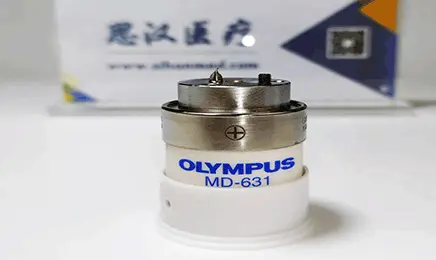
OEM-focused endoscope companies support private-label production, offering customization for hospitals and distributors. High-demand devices like the Olympus mini nephroscope illustrate the importance of specialized design and performance.
Key advantages:
Flexible design and branding options
Cost-efficient production at scale
Experience supporting international certifications (CE, FDA, ISO)
Strong engineering collaboration during product development
For private-label brands and regional distributors, OEM-focused endoscope manufacturers are often the most strategic partners.
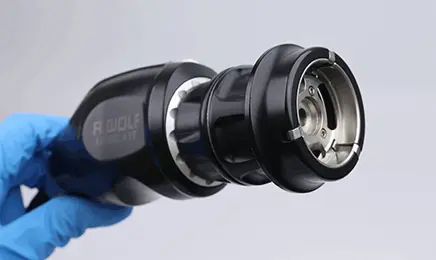
Not all buyers need complete systems. Many manufacturers and service providers work directly with endoscope parts suppliers for components such as lenses, shafts, light guides, and camera interfaces.
Typical strengths include:
Deep expertise in optical or mechanical components
Custom part manufacturing for repairs or upgrades
Support for both rigid and flexible endoscope platforms
Reliable parts suppliers play a critical role in maintaining supply chain resilience.
Selecting the right endoscope supplier requires more than reviewing catalogs. Professional buyers evaluate manufacturers using several core criteria.
A capable endoscope manufacturer should demonstrate:
CNC precision machining
Optical lens processing and coating
Cleanroom assembly environments
End-of-line inspection and performance testing
Factories with these capabilities are better positioned to maintain quality consistency.
Top endoscope manufacturing companies typically operate under:
ISO 13485 quality management systems
CE and FDA compliance experience
Documented traceability for materials and processes
These systems reduce regulatory risk for buyers entering new markets.
For many B2B buyers, customization is essential. Strong endoscope suppliers offer:
Adjustable shaft diameters and working lengths
Custom camera compatibility
Private labeling and packaging
Engineering support during design validation
This flexibility separates strategic partners from basic suppliers.
Understanding market trends helps buyers choose suppliers that will remain competitive over time.
Rigid endoscopes continue to see strong demand in ENT, urology, gynecology, and minimally invasive surgery due to their durability, image clarity, and cost efficiency.
Endoscope manufacturers are increasingly aligning product design with camera system compatibility. Buyers now expect:
Standardized optical interfaces
Improved light transmission
Seamless integration with HD and 4K camera systems
This trend favors manufacturers with strong optical engineering capabilities.
More brands are choosing OEM endoscope factories to reduce development time and capital investment. As a result:
OEM-focused manufacturers are expanding rapidly
Buyers prioritize factories with proven export experience
Long-term supplier relationships are becoming more important than one-off pricing
The right endoscope manufacturer is not just a supplier—it is a long-term partner. Buyers should evaluate factories based on technical capability, quality systems, communication transparency, and after-sales support.
For companies seeking scalable production, consistent quality, and customization flexibility, working directly with experienced endoscope manufacturing companies offers clear advantages.
An endoscope factory typically produces products in-house, while a supplier may source components from multiple manufacturers or focus on distribution. Factories using rigid endoscope parts ensure consistent quality and performance.
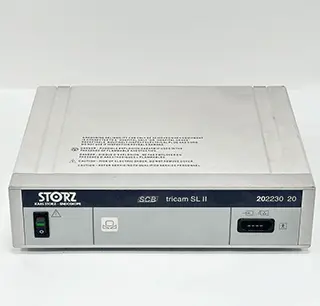
Look for ISO-certified quality systems, proven export experience, strong OEM capabilities, and transparent manufacturing processes. Equipment such as nephroscope storz price units can serve as benchmarks for quality.
Most modern rigid endoscopes are designed to work with multiple camera systems. Suppliers offering endoscope camera China modules ensure interoperability.
Key factors include component precision, material quality, customization capability, and compatibility with existing endoscope systems.
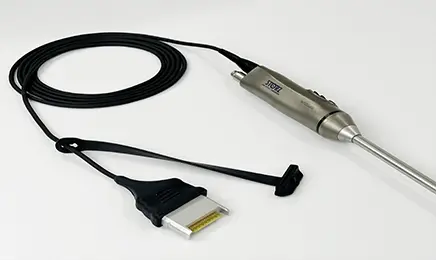
Yes. Rigid endoscopes remain essential in many surgical disciplines due to their reliability, image quality, and cost-effectiveness. High-performance platforms like the TC300 Karl Storz illustrate this ongoing demand.

With years of dedication to the medical equipment industry, Shengjun He has leveraged his solid professional expertise and keen insight into industry trends to establish Sihan Medical as a leading force in the endoscope repair sector. Prior to founding Sihan Medical, he accumulated extensive experience in medical device maintenance—a foundation that proved instrumental for his entrepreneurial journey. His background spans hands-on equipment repair, technical R&D, and management, granting him comprehensive understanding of medical devices, from their underlying technology to market demands.