Tel: +86-19906868508
E-mail: info@sihanmed.com

Tel: +86-19906868508
E-mail: info@sihanmed.com
The US flexible and semi-rigid ureteroscopy market has been growing steadily for years, but the reasons behind that growth are usually simplified. Yes, kidney stones are a major factor, but they don’t fully explain why some hospitals keep buying new scopes while others keep using older equipment for a long time. The full picture only becomes clear when you consider how often the devices are used, how frequently they need repair, and what the real long-term cost of ownership looks like.
At its core, the US flexible and semi-rigid ureteroscopy market is expanding because ureteroscopy aligns well with how modern US urology departments actually work—high patient turnover, outpatient-focused care, and constant pressure to control capital and maintenance costs. That practical alignment explains not only device adoption, but also the parallel growth of repair services, spare parts distribution, and refurbished endoscopy equipment.
In many US hospitals, ureteroscopy is no longer considered a specialized or occasional procedure. It is routine. Flexible ureteroscopes are typically reserved for more complex cases involving renal access, while semi-rigid ureteroscopes still see frequent use for distal ureteral stones and straightforward interventions.
The choice between flexible and semi-rigid scopes is rarely driven by preference alone. It is usually shaped by procedure mix, staff familiarity, and how often equipment needs to be sent out for service. Facilities with high case volumes tend to own fewer scopes than one might expect, relying instead on rapid turnaround repair and backup units.
Public health data from the National Institute of Diabetes and Digestive and Kidney Diseases consistently shows kidney stones affecting a significant share of the US population, which helps explain the stable procedural demand (Source: niddk.nih.gov).
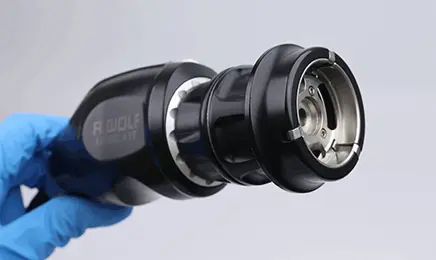
What is less visible in published statistics is how much strain repeated use places on imaging systems, camera heads, and internal components. Over time, this wear directly feeds demand for surgical camera repair and component-level maintenance.
.jpg "UreteroscopyRoutine")
Rather than growing through sudden spikes, the US ureteroscopy market has expanded in a measured way. Spending is spread across new equipment purchases, service contracts, third-party repairs, and replacement parts. Many procurement teams no longer view these as separate budgets.
| Category | US Market Estimate | Source / Notes |
| US ureteroscopy market size (2024) | ~US$ 526 million | U.S. ureteroscopy market valuation (2024) |
| Flexible ureteroscope share | ~55–58% | Flexible segment dominance |
| Semi-rigid ureteroscopes | ~30% | Semi-rigid share indication |
| Disposable / single-use trend | Growing segment | Disposable ureteroscopes USD 64.3M (2024) |
What stands out is the size of the service-related segment. Repair spending is not a temporary workaround; it is built into how US facilities plan equipment ownership.
Modern ureteroscopy depends heavily on imaging clarity. While digital systems have improved visualization, they have also increased system complexity. Camera heads, light cables, and control units are now critical points of failure.
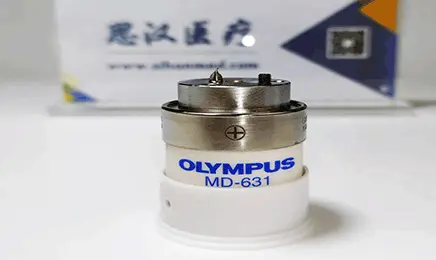
In practical terms, endoscopic camera repair has become routine. Components like the Olympus WA33036A endoscope cable, for example, are frequently serviced due to repeated sterilization and handling. For most facilities, replacing these parts outright would not be economically rational.
Basic background on endoscopic imaging systems can be found here: wikipedia.org
This shift has quietly changed vendor expectations. Hospitals now ask not only about image quality, but also about repair turnaround time and spare part availability.
Olympus and Karl Storz continue to dominate the installed base of ureteroscopy-related equipment in the US. This dominance matters less for new sales than it does for everything that comes after the initial purchase.
Facilities operating Olympus platforms frequently rely on OLYMPUS endoscope repair services to keep rigid and semi-rigid scopes in circulation. Parts such as Olympus A22001A rigid scope components or older insufflation units are still seen in daily clinical use.
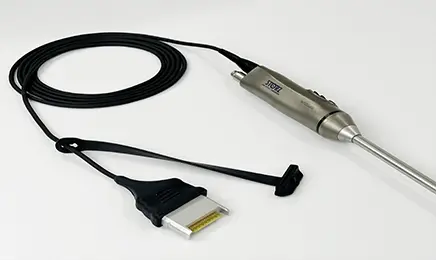
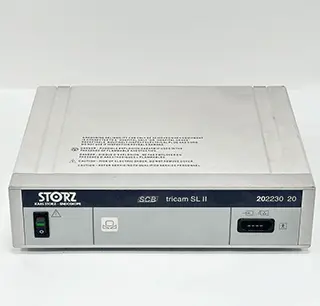
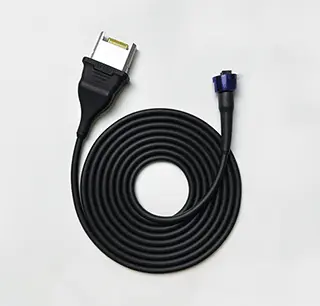
Karl Storz systems follow a similar pattern. Camera control units like the Karl Storz TL300 and TC300 Karl Storz remain active in many hospitals despite newer generations being available. This explains the consistent demand for storz scope repair and accessories, including legacy items such as the STORZ H3-Z cable.
.jpg "OlympusStorzDominance")
The ureteroscopy market is not just about scopes. It is also about everything that keeps those scopes usable. This includes:
Cystoscope repair and rigid cystoscope repair
Neuroendoscope repair for cross-departmental systems
Preventive maintenance programs
Access to endoscope parts for sale without full assembly replacement
In some US facilities, internal biomedical teams handle minor issues, while more complex repairs are outsourced. This has increased interest in endoscope repair training, particularly for high-volume centers looking to reduce downtime.
Procedure volume and purchasing behavior vary noticeably by region. Southern states tend to report higher kidney stone incidence, which supports steady ureteroscopy demand year-round. In contrast, facilities in the Northeast often manage higher patient density but operate under tighter space and staffing constraints.
| Region | Key Characteristics |
| South | High stone prevalence, steady procedure volume |
| West Coast | Faster adoption of flexible scopes and digital imaging |
| Midwest | Emphasis on durability and repairability |
| Northeast | High utilization, limited redundancy in equipment |
These regional differences influence how often facilities rely on endoscopy scope parts and replacement components instead of full system upgrades.
The medical endoscope price for new ureteroscopy systems remains high. As a result, most US facilities evaluate purchases based on lifecycle cost rather than upfront pricing alone. This includes repair frequency, expected lifespan, and compatibility with existing systems.
Nephroscope platforms, including Karl Storz nephroscope systems, are often maintained well beyond initial warranty periods. Replacement decisions are delayed as long as imaging performance and repair support remain acceptable.
In parallel, used endoscopy equipment sale channels have become normalized. They are commonly used for secondary rooms, training purposes, or as contingency inventory.
Growth in the US flexible and semi-rigid ureteroscopy market is likely to remain steady rather than dramatic. The more meaningful shift is behavioral. Facilities are becoming more selective and more realistic.
Questions that now come up regularly include:
How often will this scope need repair?
Are endoscope replacement parts available outside OEM contracts?
What happens when the camera system reaches end-of-life?
These questions shape procurement decisions just as much as clinical specifications.
It’s not just that the equipment is expensive. Flexible scopes get used constantly, and the wear comes from normal handling—sterilization, bending, and frequent insertion. Many facilities aren’t avoiding new purchases; they’re simply stretching the lifespan because replacement is costly and downtime is a real issue.
Most of the time, yes—especially when you’re dealing with high-end imaging systems. A lot of damage is localized to camera heads or cables, so endoscopic camera repair can keep a scope usable for years. Procurement teams often treat repair as a predictable operational cost rather than a one-time fix.
In practice, yes—but it depends on where they come from. A lot of hospitals use refurbished equipment intentionally because it’s a practical way to keep a backup system ready without spending on a brand-new unit. The key is that the refurbishing has to be done properly. If it’s just “cleaned up and resold,” you’ll run into problems fast. But when the unit is inspected, parts are replaced, and it’s tested under real workflow conditions, it can perform just fine for years.
Because the installed base is huge. Many facilities still run older systems, so parts demand never really drops. Items like Karl Storz TC300 and TL300 components, for example, are still in circulation. When you have that kind of legacy footprint, endoscope parts for sale stay relevant for a long time.
A lot of buyers focus only on the price tag. What they miss is the cost of downtime and repair cycles. An endoscopy scope price may look reasonable at first, but if parts are hard to find or repairs take weeks, the real cost over a year can be much higher.

With years of dedication to the medical equipment industry, Shengjun He has leveraged his solid professional expertise and keen insight into industry trends to establish Sihan Medical as a leading force in the endoscope repair sector. Prior to founding Sihan Medical, he accumulated extensive experience in medical device maintenance—a foundation that proved instrumental for his entrepreneurial journey. His background spans hands-on equipment repair, technical R&D, and management, granting him comprehensive understanding of medical devices, from their underlying technology to market demands.
This is the first one.