Tel: +86-19906868508
E-mail: info@sihanmed.com

Tel: +86-19906868508
E-mail: info@sihanmed.com
When hospitals and surgical centers compare rigid endoscopes, Karl Storz and Richard Wolf are often evaluated side by side. Both brands are well-established manufacturers of rigid endoscopy systems used in urology, laparoscopy, ENT, and arthroscopy. However, beyond brand recognition, there are meaningful product-level differences in optical construction, mechanical design, maintenance strategy, and long-term ownership value that influence purchasing decisions.
Karl Storz rigid endoscopes are best known for their precision-engineered rod lens endoscope systems that prioritize optical consistency and cross-platform compatibility, while Wolf rigid endoscopes emphasize modular construction and workflow-oriented design that can simplify maintenance and part replacement. Both deliver clinical-grade image quality and durability; the optimal choice depends on operating room setup, repair strategy, and lifecycle cost priorities.
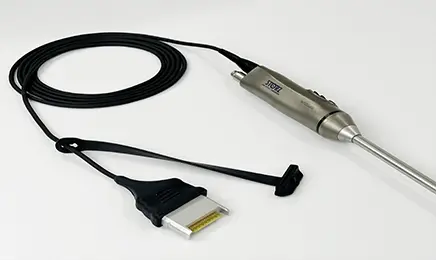
Storz rigid endoscopes are built around a refined rod-lens optical architecture designed to deliver stable brightness, contrast, and color accuracy. The optical system is optimized for use across a wide range of camera heads and light sources, making Storz scopes particularly suitable for hospitals operating mixed-brand imaging environments.
A practical advantage of this approach is visual consistency over time. With proper rigid endoscope cleaning and handling, Storz rod-lens systems tend to maintain alignment and image clarity even after repeated sterilization cycles. In clinical procurement, the Storz rigid endoscope is often selected from established rigid endoscope supplier networks with strong global support.
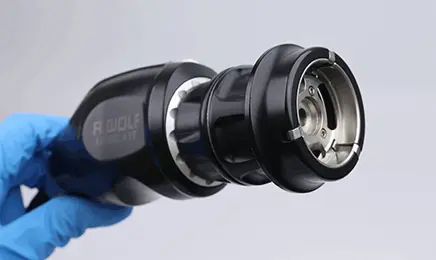
Wolf rigid endoscopes take a more modular approach to optical design. Their systems focus on integrating optical components with Wolf camera platforms while allowing flexibility in lens angles and configurations. This modularity supports faster adaptation between procedures and can reduce downtime when specific optical components require service.
From a clinical perspective, both brands meet high imaging standards, but Storz emphasizes optical stability, while Wolf emphasizes adaptability.
Mechanical durability is closely tied to how an endoscope is serviced and repaired over its lifecycle. Proper handling during daily use and understanding how sterilization of endoscope is done by standardized hospital procedures can significantly reduce damage risks.
Storz scopes are manufactured with tight mechanical tolerances and robust stainless-steel housings. This construction supports long service life but often relies on specialized service processes when damage occurs. Many hospitals work with an experienced endoscope repair specialist for inspection, resealing, and optical restoration.
Storz-compatible rigid endoscope repair services typically focus on restoring the complete optical assembly rather than swapping individual modules.
Wolf rigid endoscopes are designed with serviceability in mind. Components related to visualization or instrument access—such as the forceps channel or suction channel—can often be addressed individually. This modular design can reduce turnaround time and simplify inventory planning for facilities that prefer in-house troubleshooting or fast third-party service.
Because of this structure, sourcing endoscope parts for sale may be more straightforward for Wolf systems in some regions.
Storz rigid endoscopes are widely used across multiple specialties because of their platform-neutral compatibility. Surgeons and OR staff benefit from standardized handling, familiar optics, and consistent performance regardless of the camera system used. This makes Storz a strong option for teaching hospitals and multi-department surgical centers.
Wolf scopes are often selected for facilities that value system-level integration and procedural efficiency. Their modular configurations allow quicker adaptation between case types, especially in urology and ENT. Workflow-focused design can reduce setup time and improve procedural turnover.
Facilities that invest in rigid endoscope repair training for biomedical teams may find Wolf systems easier to support internally due to their component-based architecture.
From a procurement standpoint, the real comparison lies not only in purchase price, but in total cost of ownership (TCO).
Strong resale value
Long optical lifespan
Higher reliance on specialized repair services
Modular replacement strategy
Potentially lower downtime costs
Easier access to individual spare components
Hospitals evaluating capital investment should consider service contracts, availability of local repair partners, and expected procedure volume over a 5–7 year period.
| Category | Karl Storz Rigid Endoscope | Wolf Rigid Endoscope |
|---|---|---|
| Optical system | Rod-lens endoscope design | Modular optical configuration |
| Image consistency | Very high over long-term use | High, optimized per configuration |
| Mechanical philosophy | Integrated, precision-built | Modular, service-oriented |
| Repair approach | Full optical restoration | Component-level replacement |
| Workflow flexibility | Cross-platform compatibility | System-integrated efficiency |
| Long-term ownership | Stable, predictable lifecycle | Flexible, downtime-focused |
Wolf rigid endoscopes may be easier to maintain in-house due to modular components, while Storz scopes often rely on certified endoscope repair specialists for full optical restoration.
Yes. A well-maintained rod lens endoscope continues to provide excellent brightness and depth perception, especially in procedures requiring precise anatomical visualization.
Yes. Both Storz and Wolf scopes are autoclavable. Proper rigid endoscope cleaning and leak testing are essential to prevent optical damage.
Wolf systems may offer faster access to individual endoscope parts for sale, while Storz parts are typically sourced through authorized service channels.
Value depends on workflow and service strategy. Storz excels in durability and optical consistency, while Wolf offers flexibility and faster component-level servicing.

With years of dedication to the medical equipment industry, Shengjun He has leveraged his solid professional expertise and keen insight into industry trends to establish Sihan Medical as a leading force in the endoscope repair sector. Prior to founding Sihan Medical, he accumulated extensive experience in medical device maintenance—a foundation that proved instrumental for his entrepreneurial journey. His background spans hands-on equipment repair, technical R&D, and management, granting him comprehensive understanding of medical devices, from their underlying technology to market demands.
This is the first one.