Tel: +86-19906868508
E-mail: info@sihanmed.com

Tel: +86-19906868508
E-mail: info@sihanmed.com
Rigid endoscopes are long-term capital assets for hospitals and surgical centers. Over years of clinical use, even premium brands such as KARL STORZ and Olympus require professional repair to maintain optical performance, mechanical integrity, and patient safety. Understanding how Storz rigid endoscopy repair differs from Olympus rigid endoscopy repair helps procurement teams, biomedical engineers, and distributors make better maintenance decisions and control lifecycle costs.
In short: both brands require similar core repair processes—optical restoration, mechanical refurbishment, and sealing validation—but they differ in structural design, component modularity, and repair complexity, which directly impacts turnaround time and cost.
This article compares repairable components, common failure points, repair workflows, and decision criteria for Storz and Olympus rigid endoscopes—without referencing proprietary or protected design details.
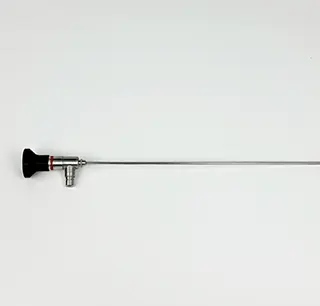
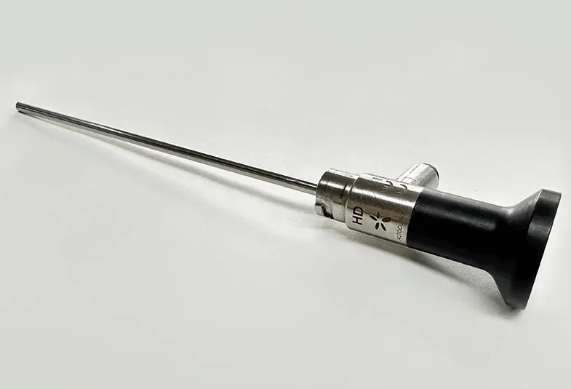
Rigid endoscopy repair refers to the professional restoration of rigid endoscopes after performance degradation caused by sterilization stress, mechanical impact, or long-term clinical use. Repair typically focuses on optical clarity, mechanical alignment, sealing integrity, and interface compatibility rather than complete device replacement.
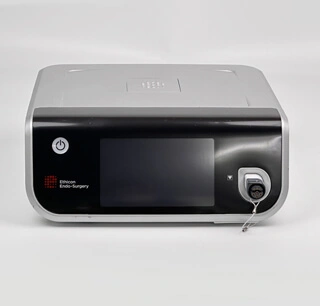
In practice, qualified service providers often maintain cross-functional repair capability, covering not only rigid scopes but also related devices such as surgical camera repair and light transmission components to ensure full system performance.
Common repair objectives include:
Restoring image clarity and brightness
Correcting mechanical deformation or looseness
Replacing worn internal components
Re-establishing waterproof and sterilization resistance
Extending usable service life while maintaining safety standards
Both Storz and Olympus rigid endoscopes are designed for repeated repair cycles, making professional refurbishment an essential part of ownership.
KARL STORZ rigid endoscopes are known for precision-machined housings and rod-lens optical systems. Their design emphasizes robustness and long-term durability, but this also means repairs require tight tolerances and precise alignment.
From a repair perspective, Storz rigid endoscopes typically involve:
Multi-segment rod-lens assemblies
Rigid stainless-steel outer shafts
Fixed optical interfaces designed for stable coupling
Repair technicians handling Storz scopes often require formal rigid endoscope repair training to manage optical alignment and mechanical reassembly without compromising image quality.
Typical Storz rigid endoscopy repair tasks include:
Rod-lens cleaning or replacement to restore image sharpness
Shaft straightening or replacement after mechanical impact
Distal window refurbishment to address scratches or clouding
Sealing restoration to prevent fluid ingress during sterilization
Interface reconditioning for consistent camera coupling
In multi-specialty hospitals, similar repair processes are also applied to devices used in urology and neurosurgery, such as Cystoscope repair and Neuroendoscope repair, which share comparable optical and mechanical principles.
Storz rigid endoscopy repair often requires longer turnaround times when optical realignment is needed. However, successful repairs can return the scope to near-original performance levels, extending its service life significantly.
Olympus rigid endoscopes are designed with system compatibility and clinical workflow integration in mind. Their designs often emphasize modular components, which can simplify certain repair procedures.
From a repair standpoint, Olympus rigid endoscopes typically feature:
Modular optical assemblies
Standardized interface geometries
Designs optimized for compatibility across Olympus imaging systems
This modular philosophy aligns well with hospitals that maintain centralized biomedical teams responsible for multiple device categories, including camera systems and accessories.
Olympus rigid endoscopy repair commonly addresses:
Optical element replacement to recover brightness and contrast
Outer tube repair or replacement due to handling damage
Proximal connector refurbishment to ensure stable camera mounting
Sealing and insulation renewal for sterilization resistance
Functional inspection to ensure system-level compatibility
Olympus repair workflows often integrate system checks alongside related equipment, including insufflation systems, making coordination with insufflator repair services increasingly common in integrated operating rooms.
Olympus rigid endoscopes often allow for more predictable repair timelines, particularly for mechanical or interface-related issues. This can be advantageous for facilities prioritizing fast equipment turnaround.
Storz: Emphasis on rod-lens alignment and optical purity
Olympus: Focus on consistent brightness and system compatibility
Both require specialized optical benches and inspection tools, but alignment tolerances may differ.
Storz: Rigid housings demand precise straightening or replacement
Olympus: Modular designs can simplify tube or connector replacement
Both brands require resealing after repair to ensure resistance to:
Autoclave sterilization
Chemical disinfection
Repeated thermal cycling
Improper sealing remains one of the leading causes of repeat failures across all rigid endoscopes.
Regardless of brand, hospitals should evaluate repair providers using consistent criteria:
A qualified repair partner should demonstrate:
Optical inspection and alignment capability
Precision mechanical tooling
Controlled repair environments
Documented inspection and testing procedures
Many hospitals prefer providers with broader expertise in endoscopic systems rather than scope-only repair.
Reliable providers offer:
Pre- and post-repair inspection reports
Leak and sealing validation
Optical performance verification
Traceable repair records
The lowest repair quote is not always the best choice. Effective rigid endoscopy repair reduces:
Repeat repair frequency
Downtime costs
Premature scope replacement
Hospitals increasingly evaluate repair as part of total cost of ownership (TCO) strategies.
Repair is typically preferred when:
Optical degradation is localized
Mechanical damage is repairable
Sealing can be fully restored
The scope remains compatible with existing systems
Replacement may be considered if:
Structural damage is extensive
Optical alignment cannot be reliably restored
Repair costs approach replacement value
Hospitals and distributors increasingly use qualified third-party repair providers to:
Reduce maintenance costs
Shorten turnaround times
Improve repair flexibility
Routine inspection and early repair reduce catastrophic failures and extend scope lifespan.
Repair providers are expanding beyond scopes to support cameras, light sources, and accessories, enabling centralized servicing for endoscopic platforms.
There is no universal “better” choice between Storz rigid endoscopy repair and Olympus rigid endoscopy repair. The optimal strategy depends on:
Scope condition
Clinical usage frequency
Turnaround time requirements
Budget and lifecycle planning
What matters most is working with a repair partner that understands rigid endoscope optics, mechanics, and sealing systems, regardless of brand.
Yes. When performed correctly, professional repair can extend service life through multiple cycles without compromising safety.
High-quality repairs restore optical clarity, sealing integrity, and mechanical stability suitable for clinical use.
Yes, when performed by qualified providers following applicable regulations and quality standards.
Common causes include mechanical impact, sterilization stress, sealing degradation, and optical contamination.
Proper handling, routine inspection, and preventive maintenance significantly reduce repair needs.
With years of dedication to the medical equipment industry, Shengjun He has leveraged his solid professional expertise and keen insight into industry trends to establish Sihan Medical as a leading force in the endoscope repair sector. Prior to founding Sihan Medical, he accumulated extensive experience in medical device maintenance—a foundation that proved instrumental for his entrepreneurial journey. His background spans hands-on equipment repair, technical R&D, and management, granting him comprehensive understanding of medical devices, from their underlying technology to market demands.
This is the first one.