Tel: +86-19906868508
E-mail: info@sihanmed.com

Tel: +86-19906868508
E-mail: info@sihanmed.com
The flexible endoscope insertion tube represents one of the most critical components in modern diagnostic and therapeutic endoscopic procedures. This sophisticated medical instrument serves as the primary conduit between the physician and the patient's internal anatomy, enabling minimally invasive exploration of the gastrointestinal tract, respiratory system, urinary tract, and other internal structures. With the global endoscopy market projected to reach USD 88.55 billion by 2034, understanding the technical specifications, operational capabilities, and proper maintenance of these insertion tubes becomes increasingly important for healthcare facilities worldwide. The insertion tube's unique combination of flexibility, durability, and multifunctionality makes it indispensable in contemporary medical practice, providing both visual access and therapeutic capabilities without the need for traditional surgical intervention.
The architecture of a flexible endoscope insertion tube represents a marvel of medical engineering, integrating multiple specialized layers and components within a remarkably slender, maneuverable form factor. This complex assembly typically features a layered construction approach where each stratum serves specific protective and functional purposes. The foundation of this design begins with an inner layer of smooth materials like PTFE (Polytetrafluoroethylene) or Pebax to reduce friction and facilitate the easy passage of instruments, while intermediate layers incorporate braided reinforcement from stainless steel or Kevlar® strands for torsional strength. The outermost layer consists of a protective medical-grade polyurethane or silicone jacket that seals the entire assembly against fluids and disinfectants while providing the necessary flexibility for anatomical navigation.
Optical Pathways: The tube contains precisely aligned fiber optic bundles or electronic wiring that transmit illumination inward and return high-quality images to the viewing system. Traditional endoscopes utilize the principle of total internal reflection (TIR) through coherent bundles containing up to 50,000 hair-thin glass fibers to maintain image integrity even through tight anatomical bends.
Service Channels: PTFE-lined lumens run parallel to optical pathways, delivering air for insufflation to expand hollow organs, water for lens rinsing to maintain visualization, and suction for fluid removal to clear the field of view.
Instrument Channels: These ancillary pathways allow the passage of specialized tools like biopsy forceps, snares, or injection needles for therapeutic interventions during procedures, typically ranging from 2.0mm to 4.2mm in diameter depending on the endoscope's application.
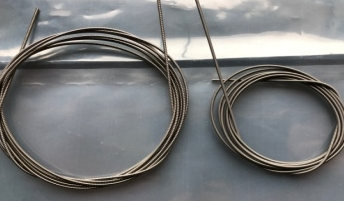
The insertion tube's distal end features a sophisticated bending section controlled by precise mechanisms in the operator's handle. Typically, four high-tensile angulation wires—manufactured from stainless steel or shape-memory nitinol alloys—run through dedicated lumens and connect to control knobs. When the physician manipulates these knobs, the wires transmit tension to sequential "vertebrae" encapsulated in a silicone boot, enabling up to 210° of deflection in multiple directions. This articulation capability allows clinicians to retroflex in the stomach or navigate complex bronchial pathways with minimal need for repositioning, significantly enhancing procedural efficiency.
Understanding the precise technical specifications of flexible endoscope insertion tubes is essential for medical facilities seeking to purchase, maintain, or optimize their endoscopic equipment. The following table outlines key parameters across different endoscopic applications:
| Specification | Gastroscope | Colonoscope | Duodenoscope | Bronchoscope |
|---|---|---|---|---|
| Working Length | 1000-1400mm | 1330-1680mm | 1240-1250mm | 400-600mm |
| Insertion Tube Diameter | 8.0-11.0mm | 11.5-13.7mm | 10.5-12.5mm | 4.9-6.3mm |
| Bending Section Range | Up: 210°, Down: 90° | Up: 180°, Down: 180° | Up: 120°, Down: 120° | Up: 180°, Down: 130° |
| Channel Inner Diameter | 2.4-3.8mm | 3.2-4.2mm | 3.2-4.2mm | 1.5-2.8mm |
| Field of View | 120-140° | 120-170° | 80-100° | 90-120° |
| Depth of Field | 3-100mm | 5-100mm | 5-60mm | 2-50mm |
These specifications directly impact the clinical applications and performance characteristics of each endoscope type. For instance, the longer working length of colonoscopes facilitates navigation through the entire colon, while the narrower diameter of bronchoscopes allows access to smaller airways. The variation in channel inner diameter determines what accessories can be used during procedures, directly influencing the therapeutic capabilities of each device.
The performance characteristics of insertion tubes depend heavily on advanced material science, with professional flexible endoscope manufacturers selecting specific compounds based on their mechanical properties and compatibility with medical applications. As one of the key parts of a flexible endoscope, the insertion tube often relies on materials such as polyurethane (PU), which remains the dominant choice for outer coatings due to its excellent balance of flexibility and strength, coupled with outstanding abrasion resistance that maintains tube integrity through repeated use and reprocessing cycles. Polytetrafluoroethylene (PTFE) is also valued for its non-stick surface and chemical resistance in internal channels, reducing friction during procedures and withstanding aggressive cleaning agents without degradation.
Nitinol Utilization: This nickel-titanium alloy provides superelasticity and shape memory capabilities, allowing the tube to navigate tight anatomical spaces and return to its original configuration after extreme bending, significantly reducing the risk of permanent deformation.
Stainless Steel Reinforcement: Used in braiding and reinforcement layers, specially treated medical-grade stainless steel provides structural support, corrosion resistance, and helps maintain torsional stability during precise manipulations.
Hybrid Polymer Developments: Recent advancements include the development of proprietary polymer blends that offer enhanced kink resistance while maintaining flexibility, with some manufacturers incorporating antimicrobial properties directly into the material matrix.
The design and dimensions of insertion tubes vary significantly based on their clinical applications, with gastroenterology accounting for the largest segment (40.6%) of the flexible endoscopes market. As an experienced endoscope parts supplier, we understand that gastroenterological procedures require the longest insertion tubes for examinations of the entire colon or for reaching the bile and pancreatic ducts during ERCP. Pulmonology applications utilize moderately sized tubes designed for navigation through the respiratory system's branching airways, while urological endoscopes employ smaller diameter tubes to traverse the delicate urinary tract. Understanding these application-specific requirements ensures healthcare facilities select the appropriate equipment for their clinical needs, optimizing both patient outcomes and operational efficiency.
Proper care of endoscope insertion tubes is essential for maintaining device functionality, ensuring patient safety, and extending equipment lifespan. The complex structure of these tubes makes them susceptible to specific types of damage if not handled, cleaned, and stored correctly. Medical facilities should implement comprehensive maintenance protocols that address the unique vulnerabilities of these sophisticated medical instruments, with particular attention to the bending section and internal channels where most failures occur.
Regular inspection of insertion tubes can identify early signs of wear before they lead to device failure or compromised patient safety. Structural damage often manifests as dents, kinks, or peeling in the insertion tube surface, indicating crushing or excessive bending during procedures. Channel compromise presents as holes or constrictions in biopsy and suction pathways, which can affect instrument passage and suction capability. Component wear typically includes deterioration of the bending rubber with holes or distortion, and blockage of air/water nozzles. Internal issues may involve broken optical fibers in light guides or fluid infiltration into the tube assembly, which can severely impact visualization quality and require costly repairs.
Implementing structured care protocols significantly reduces damage risks and extends the operational lifespan of valuable endoscopic equipment:
Comprehensive Cleaning Procedures: Meticulous cleaning immediately after each procedure using manufacturer-approved enzymatic solutions and techniques, followed by forced air drying of all channels to prevent biofilm formation and debris accumulation.
Proper Handling Guidelines: Gentle handling during use and transport, avoiding sharp bends or aggressive manipulation that can stress internal components. Implementing a "two-person rule" during insertion and withdrawal can reduce lateral stresses on the tube.
Optimal Storage Solutions: Storing endoscopes hanging straight in well-ventilated, climate-controlled cabinets to prevent moisture retention and structural deformation that can occur with improper coiling.
Scheduled Inspections: Conducting thorough pre- and post-procedure examinations using bright light and magnification to identify subtle damage signs, combined with regular leak testing to detect early fluid intrusion.
Professional Servicing Partnerships: Adhering to manufacturer-recommended maintenance schedules and using trained technicians for repairs, with many facilities benefiting from comprehensive service contracts that minimize downtime.

With years of dedication to the medical equipment industry, Shengjun He has leveraged his solid professional expertise and keen insight into industry trends to establish Sihan Medical as a leading force in the endoscope repair sector. Prior to founding Sihan Medical, he accumulated extensive experience in medical device maintenance—a foundation that proved instrumental for his entrepreneurial journey. His background spans hands-on equipment repair, technical R&D, and management, granting him comprehensive understanding of medical devices, from their underlying technology to market demands.
This is the first one.