Tel: +86-19906868508
E-mail: info@sihanmed.com

Tel: +86-19906868508
E-mail: info@sihanmed.com
Arthroscopic orthopaedic surgery has become a routine choice in the United States for treating joint issues. Whether it’s the knee, shoulder, hip, or other load-bearing joints, these procedures are now commonly done in both hospitals and outpatient surgery centers, especially in sports medicine and degenerative joint care. As more teams adopt minimally invasive workflows, arthroscopy has shifted from being a specialized technique to a standard option for many surgeons.
In practical terms, the U.S. market for arthroscopic orthopaedic instruments is growing for two reasons. First, the number of procedures keeps rising. Second, hospitals and ASCs are changing how they handle equipment—many are choosing to repair, refurbish, and upgrade what they already have instead of buying entirely new systems. That shift has created a market where new device sales sit alongside a steady demand for endoscope repair, replacement parts, and technical support.
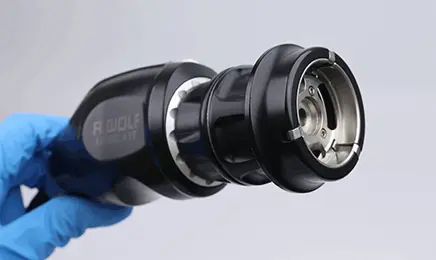
Arthroscopic surgery does not rely on a single device, but on a coordinated system of optical and electronic components. Inside the operating room, rigid scopes, camera heads, light transmission cables, fluid management units, and electrosurgical systems must function together under repeated mechanical stress.
From a technical standpoint, a rigid endoscope is a straight optical instrument built around a rod-lens structure, designed to transmit stable, high-resolution images from inside the joint cavity. In orthopaedic procedures, rigid scopes are favored for their durability and consistent imaging performance, especially during cases that involve frequent instrument exchanges or joint manipulation.
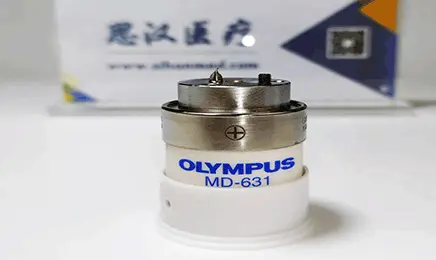
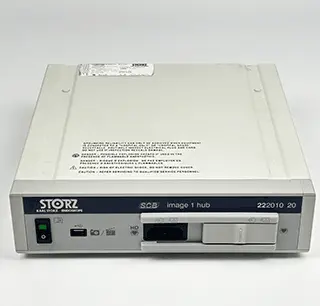
Across the U.S., commonly installed platforms include Olympus arthroscopes paired with components such as Olympus WA33036A, while Karl Storz systems remain widely used in both hospital and ASC settings. Visualization processors like the Karl Storz TC300 are often supported by accessory units that require periodic endoscopic camera repair to maintain image quality.
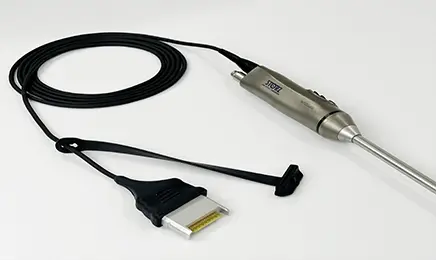
Light transmission is another frequent service area. High-use items such as endoscope cable assemblies and the STORZ H3-Z cable are exposed to bending, torsion, and thermal stress, making them among the most commonly replaced parts in arthroscopy suites.
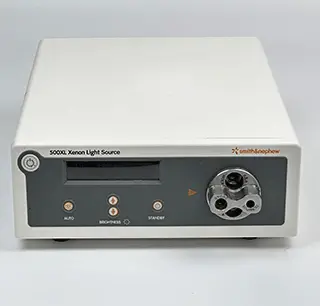
The cost of a complete arthroscopy setup is substantial. When hospitals evaluate total endoscopy equipment cost, they often find that camera systems, light sources, and processors represent a long-term investment rather than a one-time purchase. As a result, many procurement teams compare the price of new systems with refurbished alternatives and component-level repair.
This cost-conscious approach has fueled interest in the used endoscopy equipment sale market, particularly among outpatient centers. Instead of purchasing a full replacement tower, facilities may opt to refurbish existing systems, replace worn optical components, or source compatible endoscopy machine parts from certified suppliers.
Models such as Karl Storz TL300 processors or legacy Olympus systems remain in active clinical use, supported by ongoing access to parts and technical service rather than full system replacement.
Repair and refurbishment have become a core segment of the arthroscopic instrument market. High-value components are rarely discarded at the first sign of degradation. Instead, hospitals increasingly rely on third-party service providers for targeted interventions.
Common service categories include:
OLYMPUS endoscope repair for optical and mechanical restoration
Storz scope repair for rigid arthroscopes and camera systems
Specialized Neuroendoscope repair and Cystoscope repair, including rigid cystoscope repair
Preventive maintenance programs supported by formal endoscope repair training
Replacement demand is particularly strong for consumable or semi-consumable items such as endoscope replacement parts, endoscopy scope parts, and other rigid scope parts that experience wear under daily use.
Components associated with models like Olympus A22001A and Olympus A22003A are frequently sourced through independent channels, reinforcing the importance of a reliable endoscope parts supplier network.
| Equipment Category | Examples in Clinical Use | Typical Application | Service Frequency |
| Arthroscopes | Karl Storz nephroscope | Joint visualization | Medium |
| Camera Systems | TC300 Karl Storz | Image processing | High |
| Light Transmission | STORZ H3-Z cable | Illumination | High |
| Insufflation & Fluid | Olympus insufflator | Pressure control | Medium |
| Electrosurgery | Force FX 8C | Tissue cutting | Medium |
| Accessories | Endoscopy parts | System support | High |
The data reflects why the aftermarket for endoscopy parts now represents a meaningful share of total market activity.
Refurbished equipment allows facilities to lower the overall medical endoscope price, reduce capital expenditure, and shorten procurement cycles. Refurbished systems, including a refurbished CONMED electro surgical unit, are commonly used in ASCs where budget efficiency is critical.
Performance and longevity depend heavily on repair quality. Non-OEM components may vary in lifespan, making inspection, documentation, and traceability essential. Facilities must also ensure compliance with regulatory expectations for device servicing.
In the United States, medical device servicing is regulated based on safety and performance outcomes rather than brand exclusivity, as outlined by the FDA.
The United States remains one of the largest national markets for arthroscopic equipment. Strong insurance coverage, high surgical volumes, and a well-developed secondary market all contribute to sustained demand.
States such as California, Texas, Florida, and New York show particularly strong activity in price comparison for endoscopy scope price and rapid turnaround repair services, especially within sports medicine-focused centers.
For general background on endoscopic technologies and their clinical applications, refer to Wikipedia’s overview of endoscopy
(Source: wikipedia).
The U.S. arthroscopic orthopaedic surgery instrument market is likely to stay on a steady growth path instead of showing sharp ups and downs. Even though new system upgrades and innovations continue to appear, the near-term expansion of the market is mostly driven by smaller, incremental improvements, a stronger repair and maintenance network, and ongoing demand for endoscopy machine parts.
In practice, many providers are no longer looking to replace entire imaging platforms. Instead, they focus on keeping existing Olympus and Karl Storz systems in service for longer through targeted repairs, component swaps, and routine maintenance. This approach is often more cost-effective and operationally efficient than full system replacement.
High procedure volume combined with rising replacement costs has made repair the most practical option for many facilities.
Yes, as long as repairs meet FDA servicing and performance guidelines.
By using refurbished systems, replacing worn endoscope cable components, and sourcing parts through qualified suppliers.
Yes. The used endoscopy equipment sale market is well established, particularly among ASCs and private clinics.

With years of dedication to the medical equipment industry, Shengjun He has leveraged his solid professional expertise and keen insight into industry trends to establish Sihan Medical as a leading force in the endoscope repair sector. Prior to founding Sihan Medical, he accumulated extensive experience in medical device maintenance—a foundation that proved instrumental for his entrepreneurial journey. His background spans hands-on equipment repair, technical R&D, and management, granting him comprehensive understanding of medical devices, from their underlying technology to market demands.
This is the first one.