Tel: +86-19906868508
E-mail: info@sihanmed.com

Tel: +86-19906868508
E-mail: info@sihanmed.com
Rigid endoscopes remain a cornerstone of modern minimally invasive surgery, supporting procedures across urology, orthopedics, ENT, and general surgery. Among the many endoscopy equipment manufacturers, Karl Storz and Smith & Nephew are two globally recognized brands frequently evaluated by hospitals and surgical centers. While both offer clinically proven rigid endoscopes, their design philosophy, optical systems, technology focus, and long-term ownership considerations differ in meaningful ways.
Karl Storz rigid endoscopes are widely known for their classic rod-lens optical architecture, delivering consistent brightness and image stability across a wide range of clinical scenarios, while Smith & Nephew rigid endoscopes are often selected for their strong integration with advanced digital imaging platforms, particularly in high-resolution arthroscopic workflows. Neither option is inherently “better”; the optimal choice depends on imaging priorities, system compatibility, and institutional workflow needs.
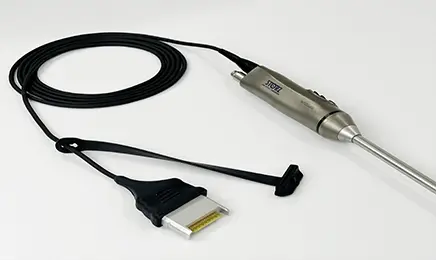
To understand the differences between these two brands, it helps to start with a clear rigid endoscope definition. A rigid endoscope is a non-flexible optical instrument composed of a metal shaft, internal optical elements, and an eyepiece or camera interface, designed to transmit light and images from inside the body with minimal distortion. Compared with flexible endoscopes, rigid scopes typically offer higher image clarity, superior durability, and greater precision in narrow anatomical spaces.
Both Karl Storz and Smith & Nephew manufacture rigid endoscopes intended for repeated clinical use, sterilization, and long-term deployment in operating rooms. Their scopes are used in procedures where stable visualization and mechanical rigidity are essential, such as cystoscopy, nephroscopy, arthroscopy, and neuroendoscopy.
Karl Storz rigid endoscopes are closely associated with the rod lens endoscope concept. This optical design uses a series of solid glass rod lenses rather than fiber bundles, allowing efficient light transmission, high contrast, and reduced image degradation over time. In clinical practice, this translates to stable color reproduction and dependable clarity, even after repeated sterilization cycles.
The rod-lens system has made Karl Storz scopes particularly popular in multi-specialty environments, where surgeons rely on predictable optical performance across different camera heads and light sources.
Smith & Nephew places strong emphasis on system-level imaging performance. Their rigid endoscopes are engineered to work seamlessly with advanced digital camera systems, optimizing resolution, sharpness, and visual detail when paired with modern HD or 4K imaging chains. In arthroscopy-focused operating rooms, this integration can enhance visualization of fine tissue structures and improve procedural confidence.
Clinical takeaway:
Karl Storz emphasizes optical consistency and longevity, while Smith & Nephew prioritizes digital imaging optimization within a tightly integrated system environment.
Rigid endoscopes must withstand frequent handling, sterilization, and transport. Both brands manufacture scopes using medical-grade stainless steel and precision-sealed optical assemblies designed for long service life.
Karl Storz places particular emphasis on leak prevention and verification. Accessories such as the Karl Storz leak tester are commonly used by sterile processing departments to detect micro-leaks early, helping preserve internal optics and reduce unexpected downtime.
Smith & Nephew rigid endoscopes are similarly designed for repeated sterilization and are supported by defined reprocessing protocols. Their focus is on minimizing connection wear and maintaining image alignment during high-volume arthroscopic use.
Regardless of brand, hospitals increasingly rely on an experienced endoscope repair specialist to handle preventive inspections, optical alignment, and refurbishment. Proper maintenance has a significant impact on image quality, surgeon satisfaction, and total cost of ownership.
Karl Storz rigid endoscopes are often selected by institutions seeking broad compatibility. Their scopes can be integrated into diverse OR setups, making them suitable for facilities that operate mixed imaging platforms or frequently upgrade camera systems.
Smith & Nephew rigid endoscopes, by contrast, are frequently chosen by centers that standardize on a unified imaging ecosystem. When used within a single-brand video chain, they offer streamlined setup, predictable performance, and efficient workflow for specialized procedures such as sports medicine arthroscopy.
Neither approach is inherently superior; the choice reflects whether flexibility or system integration is more valuable to the clinical environment.
Initial acquisition cost is only one part of the decision-making process. Long-term value depends on:
Optical durability over years of use
Frequency and cost of repairs
Availability of compatible accessories
Support from manufacturers and service partners
Karl Storz’s long-established rod-lens platform can support extended service life with proper maintenance, while Smith & Nephew’s system-driven approach may reduce workflow friction and training complexity in specialized surgical programs.
Hospitals evaluating both brands should consider procedure volume, existing imaging infrastructure, and access to reliable repair services when calculating total cost of ownership.
| Evaluation Area | Karl Storz Rigid Endoscope | Smith & Nephew Rigid Endoscope |
|---|---|---|
| Optical design | Rod-lens based, stable brightness | Digitally optimized imaging |
| System compatibility | Broad, multi-platform | Best within unified systems |
| Durability focus | Leak prevention and optical sealing | Connection stability and workflow |
| Clinical use | Multi-specialty versatility | Arthroscopy-centric excellence |
| Ownership model | Long lifecycle with maintenance | System-driven efficiency |
The core difference lies in optical philosophy and system integration. Karl Storz focuses on classic rod-lens clarity and broad compatibility, while Smith & Nephew emphasizes optimized performance within advanced digital imaging systems.
Rigid endoscopes are generally easier to maintain than flexible scopes, but regular inspection and professional servicing by an endoscope repair specialist are essential to preserve optical quality and prevent internal damage.
Yes. Leak testing, optical inspection, and mechanical evaluation are standard parts of preventive maintenance. Using proper testing tools helps extend service life and reduce unexpected failures.
Karl Storz is often preferred in multi-department hospitals due to its compatibility across different imaging platforms, while Smith & Nephew is ideal for facilities with a strong focus on arthroscopy and integrated video systems.
The decision should be based on clinical application, existing equipment, long-term maintenance strategy, and workflow preferences rather than brand name alone.

With years of dedication to the medical equipment industry, Shengjun He has leveraged his solid professional expertise and keen insight into industry trends to establish Sihan Medical as a leading force in the endoscope repair sector. Prior to founding Sihan Medical, he accumulated extensive experience in medical device maintenance—a foundation that proved instrumental for his entrepreneurial journey. His background spans hands-on equipment repair, technical R&D, and management, granting him comprehensive understanding of medical devices, from their underlying technology to market demands.