Tel: +86-19906868508
E-mail: info@sihanmed.com

Tel: +86-19906868508
E-mail: info@sihanmed.com
Arthroscopy is a regular part of orthopedic work in the US. Most hospitals and surgery centers handle knee and shoulder cases all the time, with hip and wrist procedures mixed in. The equipment used for these surgeries has changed over the years, and the way people think about it has changed too. It’s not only about buying new instruments anymore. Keeping existing equipment running through repairs, parts replacement, and refurbished systems has become normal practice.
What keeps the market active is fairly straightforward. More procedures are being done, and more of them are happening outside traditional hospitals. At the same time, facilities are paying more attention to how long their equipment stays usable. Because of that, repairs and parts sourcing are no longer afterthoughts—they’re simply part of day-to-day planning.
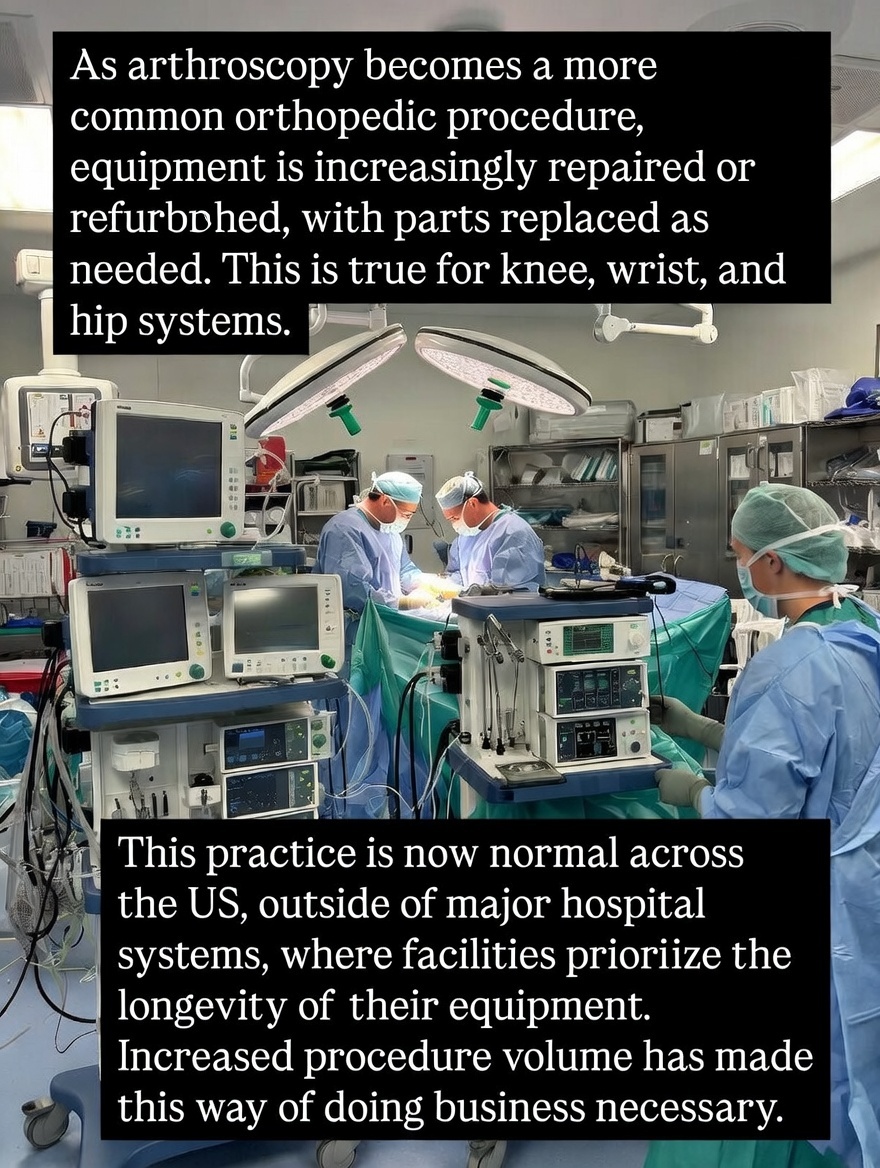
To better understand why arthroscopy instruments are in demand, here’s a short explanation of arthroscopy and how it’s performed by orthopedic specialists
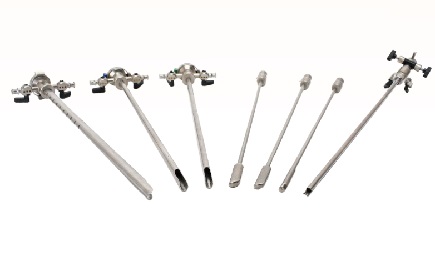
Arthroscopy instruments include scopes, cameras, light sources, and a range of surgical tools used in minimally invasive joint surgery. In the US, growth is fueled by several factors:
An aging population with increasing joint degeneration
Higher sports injury rates in younger demographics
Faster adoption of outpatient and ambulatory surgery center (ASC) models
Continuous technological upgrades in imaging and instrument design
The overall arthroscopy market is tied closely to healthcare spending trends and hospital capital budgets. In many cases, the decision to buy new instruments is delayed because the cost of endoscopy equipment is high and the tools can often be maintained through repair and replacement of key components.
For general background on arthroscopy, see the Wikipedia
In the US, arthroscopy instruments are a common part of the endoscopy equipment landscape. Different reports may show different figures, but the overall pattern is easy to see. More procedures are happening in outpatient settings, and growth has followed that shift. At the same time, hospitals aren’t replacing instruments as often, so repair and maintenance have become routine costs rather than occasional ones.
| Category | Typical Share | Notes |
| New arthroscopy instruments | High | Capital purchases and planned upgrades |
| Repair & maintenance | Medium | Frequent due to heavy daily use |
| Replacement parts & accessories | Medium | Cables, connectors, seals, camera components |
| Refurbished/secondary market | Low | Backup systems, budget-limited facilities |
This kind of spending structure is one reason the endoscope repair specialist segment is expanding. In orthopedic surgery, the equipment sees heavy daily use, so the need for surgical camera repair and scope servicing is constant.
Many facilities are now treating repair as a planned operational strategy rather than a reactive measure. Flexible and rigid scopes, camera systems, and light cables all face wear from repeated sterilization and handling. This is where the aftermarket becomes crucial.
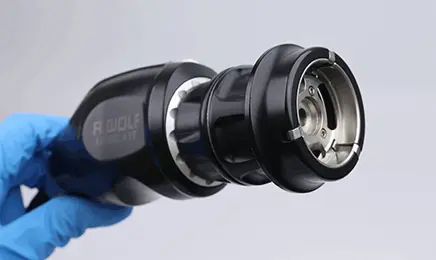
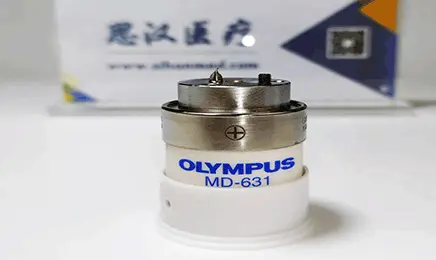
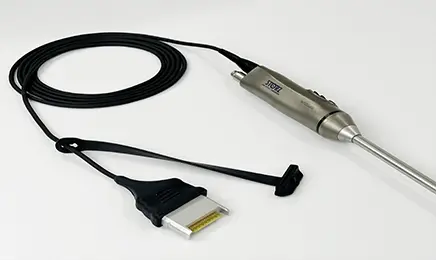
For example, a common component in many endoscopic systems is the endoscope cable WA33036A Olympus. When a cable fails, it doesn’t necessarily mean the entire system is obsolete. Hospitals often prefer endoscopic camera repair and component replacement to full system replacement.
Other parts and repair needs include:
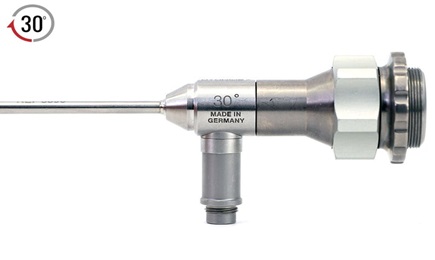
Olympus A22001A rigid scope parts
STORZ H3-Z cable
Olympus insufflator for fluid management
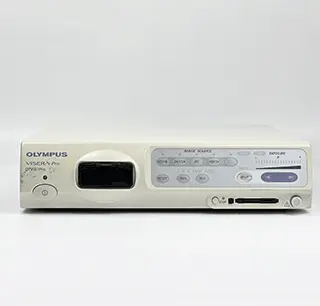
Karl Storz TL300 camera systems and related TC300 Karl Storz components
These are not just “nice to have.” They affect how quickly a surgery center can return equipment to service.
.jpg "ArthroRepairStrategy")
High-quality arthroscopy systems still come with a high price tag, so hospitals don’t just look at the upfront cost. They also think about how much it will cost to keep the equipment running. Often, fixing a broken part or replacing a cable is cheaper than buying a whole new system.
Another reason repair stays common is that many hospitals already have working systems from brands like Olympus and Karl Storz. As long as they are maintained properly, these older systems keep performing. That’s why endoscope parts for sale and replacement parts are still in steady demand.
A growing trend in the US is the use of refurbished endoscopy equipment and used systems. These are especially popular in outpatient centers and smaller hospitals where budget constraints are tighter. In addition, the used endoscopy equipment sale market is expanding because it provides a faster and cheaper way to maintain backup instruments.
The US market is not uniform. Different regions show varying demand patterns:
| Region | Key Drivers |
| Northeast | High hospital density, high procedure volume |
| South | Growing population, high sports injury rates |
| Midwest | Strong outpatient surgery adoption |
| West Coast | Rapid technology adoption and upgrades |
These regional differences influence how frequently hospitals seek endoscope parts suppliers, repair services, and refurbishment options.
Looking ahead, the US arthroscopy instruments market is expected to grow steadily but with a shift toward value-based purchasing. Hospitals will increasingly prioritize:
Repairable and durable systems
Efficient supply chains for endoscopy scope parts
Predictable lifecycle costs
Access to certified repair and training services
In this environment, the role of endoscope repair training becomes more important. Biomedical engineering teams and third-party repair providers will need to keep pace with evolving scope technologies.
Mostly because arthroscopy is used so often. Knee and shoulder cases are done every day, and with more of that work moving to outpatient centers, the same instruments get used again and again.
In most cases, something small fails before the whole system does. A damaged cable or camera issue can be fixed quickly, so replacing everything rarely makes sense.
Yes. Many centers keep refurbished systems on hand as backup, or use them in rooms with lower case volume. Cost is a factor, but availability and shorter lead times matter too.
Cables, connectors, and camera components take the most abuse. They’re handled constantly and go through sterilization over and over, so it’s normal for them to need replacement.
Over time, it does. Fixing individual components helps stretch the life of expensive equipment, which is why many hospitals build repair into their annual budgets instead of planning full replacements.
U.S. Endoscope Repair Market: A Comprehensive Strategic Analysis and Forecast
Germany Disposable Ureteroscope Market: How German Hospitals Are Rethinking Urology Equipment
Germany’s Flexible & Semi-Rigid Ureteroscopy Market: Repair, Parts, and Cost Drivers
Arthroscopy Instruments Market in the U.S.: What’s Really Driving Demand
UK Arthroscopes Market: Why Demand Is Steady and Repairs Matter
Percutaneous Nephroscope Market: Global Trends, Pricing Insights, and Equipment Ecosystem
China Endoscopy Devices Market: What’s Driving Growth and Where the Opportunities Are

With years of dedication to the medical equipment industry, Shengjun He has leveraged his solid professional expertise and keen insight into industry trends to establish Sihan Medical as a leading force in the endoscope repair sector. Prior to founding Sihan Medical, he accumulated extensive experience in medical device maintenance—a foundation that proved instrumental for his entrepreneurial journey. His background spans hands-on equipment repair, technical R&D, and management, granting him comprehensive understanding of medical devices, from their underlying technology to market demands.
This is the first one.