Tel: +86-19906868508
E-mail: info@sihanmed.com

Tel: +86-19906868508
E-mail: info@sihanmed.com
The US endoscope repair market is transitioning into a $1 billion industry by 2030, currently experiencing a 10.4% CAGR (2021-2030). This growth is driven by a massive annual volume of 15 million endoscopic procedures in the U.S., placing unprecedented mechanical strain on a $25 billion installed base of reusable devices. While endoscopy equipment manufacturers (OEMs) still dominate service revenue, Independent Service Organizations (ISOs) are rapidly capturing share in Ambulatory Surgical Centers (ASCs) by offering 40-60% cost reductions and specialized flexible endoscope parts. This analysis examines the shift toward third-party endoscope repair specialists and the rising demand for technical precision in surgical camera repair and component-level maintenance.
In the modern American healthcare landscape, the endoscope is no longer a simple diagnostic tool; it is a high-capital surgical asset. With a single OEM endoscope typically costing between $30,000 and $50,000 (Source: FDA/Fortune Business Insights), hospitals are facing immense fiscal pressure to extend the lifecycle of their equipment.
The U.S. endoscope repair market was valued at approximately $405.6 million in 2021 and is projected to reach $990.7 million by 2030 (Source: P&S Intelligence). This explosive growth is fueled by two primary factors: the rising incidence of gastrointestinal and colorectal cancers, and the "repair over replace" strategy adopted by cost-conscious procurement departments.
| U.S. Endoscope Repair Market Data Matrix (2021–2033) | ||||
|---|---|---|---|---|
| Metric | 2021/2024 Actuals | 2030/2033 Projection | CAGR | Authority Reference |
| U.S. Repair Market Size | $405.6 M (2021) | $990.7 M (2030) | 10.4% | P&S Intelligence |
| Global Repair Market | $2.8 B (2024) | $4.6 B (2033) | 5.8% | DataHorizzon Research |
| Flexible Scope Share | 70% of Repairs | Growing | N/A | 24x7 Magazine |
| ASCs Market Growth | 53.6% Usage | Fastest Segment | 9.7% | Grand View Research |
To navigate this market, facilities must understand the technical nuances between different modalities.
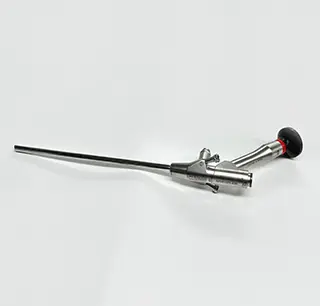
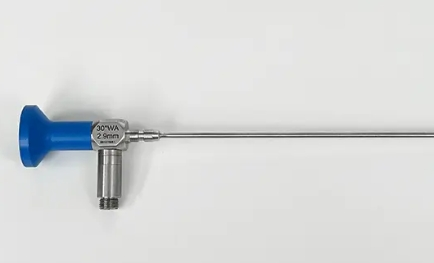
A rigid endoscope definition centers on the use of a non-flexible stainless steel tube that houses a sophisticated optical rod-lens system. These are primarily utilized in laparoscopy and arthroscopy. According to SNS Insider, the U.S. rigid endoscopes market alone is valued at $2.39 billion and is expected to reach $3.67 billion by 2033.
The primary failure point for these devices is the optical chain. Rigid scope parts—specifically the objective lenses and internal fiber optics—are frequently damaged by excessive heat during autoclaving. For institutions managing these assets, rigid endoscope repair training has become a vital internal competency to reduce the "accidental damage" that accounts for 40% of all repair costs.
Conversely, flexible endoscopes account for approximately 70% of the U.S. repair volume (Source: P&S Intelligence). These devices are significantly more complex, featuring moving parts that navigate the winding pathways of the GI tract.
Frequent failures occur in:
Bending Sections: The "蛇管" or articulation system that allows for 210° movement.
Insertion Tubes: Which must withstand both mechanical stress and harsh chemical disinfection.
Flexible Endoscope Parts: Specialized components like biopsy channel liners and distal caps that require OEM-grade tolerances to prevent fluid invasion.
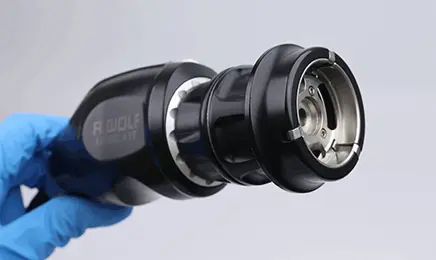
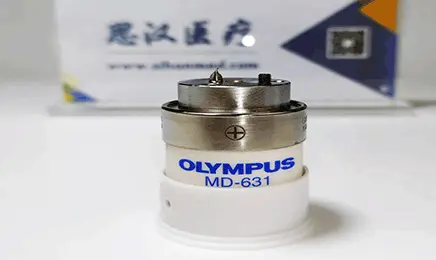
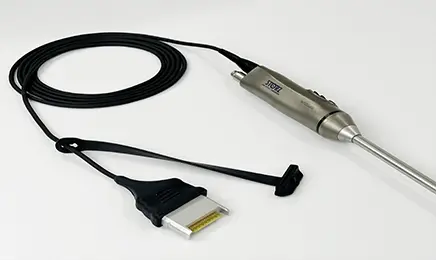
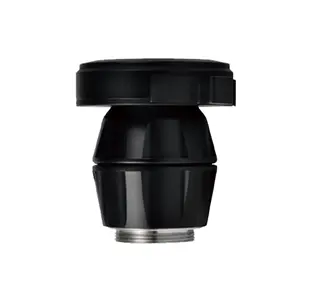
The modern endoscopy suite is incomplete without visualization equipment. Surgical camera repair has evolved into a high-tech discipline focused on 3-chip CCD and CMOS sensors. For example, systems like the Karl Storz H3 Z represent the pinnacle of HD visualization.
The most common failure point in these systems isn't the sensor itself, but the endoscope cable. Constant manipulation and tight coiling during storage lead to internal wire fatigue, causing signal intermittent failures or "snowy" images. An endoscope repair specialist focuses on component-level fixes—replacing the cable or the coupler—rather than the OEM approach of "whole unit replacement," which can save a facility thousands of dollars per head.
The U.S. market is fiercely contested between endoscopy equipment manufacturers (OEMs) and Independent Service Organizations (ISOs).
Major players like Olympus (with a 7.5% CAGR in 2025 and $1.35 billion revenue), Fujifilm, and Karl Storz collectively control over 70% of the global equipment supply (Source: Global Growth Insights). However, their service models are often criticized for:
Proprietary Locks: Restricting access to endoscopy machine parts and service manuals.
High Costs: Service contracts that can cost up to 15% of the device's original value annually.
End-of-Life (EOL) Arbitrariness: Discontinuing support for perfectly functional older models to force new sales.
ISOs are predicted to grow at a CAGR of over 10% through 2030 (Source: P&S Intelligence). These specialists provide:
Multi-Brand Flexibility: Servicing an Olympus insufflator and a Storz camera under one roof.
Access to Quality Components: Sourcing flexible endoscope parts that match or exceed original specifications.
Sustainability: Keeping older units in circulation, which is crucial for the used endoscopy equipment sale market where secondary clinics find their primary inventory.
In the U.S., endoscope repair is not just about mechanical function; it's about patient safety. The Centers for Disease Control and Prevention (CDC) reports that over 15 million colonoscopies are performed annually. A study from Johns Hopkins University revealed that infection rates tied to improper sterilization occurred in 1 out of every 1,100 procedures (Source: AORN/Outpatient Surgery Magazine).
This has led to:
Strict Adherence to ST91 Standards: Provided by the Association for the Advancement of Medical Instrumentation (AAMI).
FDA Scrutiny: The FDA's 2025 guidelines emphasize that any endoscope repair specialist must prove that their materials (like glues and rubbers) do not interfere with high-level disinfection (HLD).
By 2026, the industry is moving toward "Smart Maintenance."
Predictive Diagnostics: Using AI to analyze the image quality of a surgical camera and predict sensor failure.
Transparency: Online portals where hospitals can track the status of their endoscope cable replacement or lens refurbishment in real-time.
Advanced Insufflation: Newer models of the Olympus insufflator now integrate with EMR systems, requiring service technicians to have IT and networking expertise in addition to mechanical skills.
A rigid endoscope is an optical device used for visualization during surgery that does not bend. It utilizes a rod-lens system and is common in laparoscopy. For a deeper dive into maintenance, many techs undergo specialized rigid endoscope repair training.
Primarily due to cost and flexibility. Independent specialists can often source high-quality endoscopy machine parts for multiple brands, whereas an OEM endoscope manufacturer will only service their own brand at a premium price.
The bending rubber, insertion tube, and biopsy channel. Because flexible scopes traverse winding anatomy, these flexible endoscope parts undergo significant mechanical stress during every procedure.
Yes. Advanced ISOs specialize in surgical camera repair and have the clean-room environments necessary to replace sensors, couplers, and the endoscope cable for top-tier 3-chip systems.

With years of dedication to the medical equipment industry, Shengjun He has leveraged his solid professional expertise and keen insight into industry trends to establish Sihan Medical as a leading force in the endoscope repair sector. Prior to founding Sihan Medical, he accumulated extensive experience in medical device maintenance—a foundation that proved instrumental for his entrepreneurial journey. His background spans hands-on equipment repair, technical R&D, and management, granting him comprehensive understanding of medical devices, from their underlying technology to market demands.
This is the first one.