Tel: +86-19906868508
E-mail: info@sihanmed.com

Tel: +86-19906868508
E-mail: info@sihanmed.com
Endoscopy relies on precision equipment, with the endoscope insertion tube playing a pivotal role in diagnostics and treatment. Its flexibility, durability, and biocompatibility determine performance—yet few consider how material selection defines these properties. Whether in gastrointestinal, bronchial, or surgical imaging, the wrong choice can lead to stiffness, kinking, or contamination risks.
The short answer: Most modern endoscope insertion tubes use medical-grade plastics (like polyurethane or polyethylene) reinforced with braided metal mesh, while some specialized scopes employ high-performance polymers like Pebax or PTFE. However, material blends vary drastically based on endoscopic types and manufacturers’ proprietary designs.
Beyond basic compatibility, deeper considerations emerge: Why do certain materials dominate? How do trade-offs between flexibility and torque transmission impact usability? And crucially—what should procurement teams prioritize when evaluating durability versus cost? The answers lie in both chemistry and clinical pragmatism.
Serving as the endoscope’s backbone, the insertion tube must navigate anatomy without causing trauma—yet resist buckling when pushed. Imagine a tool simultaneously pliable as a vein yet sturdy as a catheter: this duality demands material mastery. This is why even used olympus endoscopy equipment with original insertion tubes can command higher resale value when materials are well preserved.
Twisting through torturous pathways, thinner tubes prioritize flexibility but risk collapsing, whereas thicker designs trade maneuverability for stability. Neither extreme works universally, forcing manufacturers into careful balancing acts. Therein lies the challenge: harmonizing pushability and bend radius without sacrificing sterilization resilience. Healthcare providers must also consider how sterilization of endoscope is done by validated protocols to ensure material integrity over repeated cycles.
Worse still, repeated stress cycles degrade inferior polymers, leading to microcracks that harbor pathogens. No surprise, then, that regulatory bodies scrutinize material fatigue resistance almost as fiercely as biocompatibility. An endoscope insertion tube that withstands 1,000 insertions—but fails at 1,001—becomes both a financial and ethical liability. Partners in maintenance and repair often source flexible endoscope repair parts to proactively replace stressed segments before failure occurs.
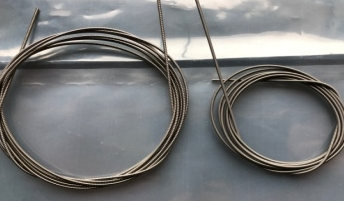
A tube too stiff strains tissues; too limp won’t advance. High-durometer polymers grant control but demand metal coil reinforcement to prevent kinking—hence the ubiquity of stainless-steel mesh cores. Inserting tubes with optimized torque response helps reduce wear on the endoscope bending rubber and enhances procedural control.
Autoclaving, enzymatic cleaners, and bodily fluids attack weak polymers. Top-tier tubes thus integrate hydrophobic additives to repel moisture and resist oxidation. This is especially important when combining insertion tubes with components sourced from diverse makers, such as flexible endoscope parts and function assemblies.
Dragging against mucosa increases patient discomfort. Some brands now embed silicone coatings that mimic cartilage’s slickness, easing insertion. High‑quality materials improve user experience compared to older force fx 8c series scopes where friction was a noted concern.
| Requirement | Ideal Material Property | Trade-Offs |
|---|---|---|
| Flexibility | Low Shore hardness | Reduced pushability |
| Kink Resistance | Braided metal mesh | Added weight/cost |
| Sterilization Durability | High melting point (e.g., PTFE) | Lower elasticity |
Dominating disposable endoscopes, polyurethane balances cost and performance. While prone to scratching over time, its mid-range flexibility suits most diagnostic scopes. Polyurethane’s performance is often a consideration when comparing with karl storz nephroscope materials in similar flexible applications.
For articulating segments requiring memory shape retention, Pebax’s rubber-like rebound outperforms rigid alternatives. High-end bronchoscopes often leverage its fatigue resistance. This resilience contrasts with products like storz h3 z where rigid performance is needed.
Where frictionless movement is nonnegotiable—such as in pediatric scopes—PTFE’s near-zero surface energy minimizes trauma. Its downside? Prohibitively expensive for mass adoption. PTFE’s chemical resistance is often favored in complex systems compared to generic flexible structures in a flexible endoscope definition context.
Cost whispers loudly, but material failures scream. Opt for cheap thermoplastic elastomers, and reprocessing erosion may demand premature tube replacements—nullifying any initial savings. Only when accounting for mean cycles between failures does premium-grade Pebax justify its price. Facilities investing in components like nephroscope storz may apply similar material scrutiny to insertion tubes.
Nor can compatibility be an afterthought. A urology scope’s tube, perpetually immersed in saline, demands different corrosion inhibitors than a colonoscope battling enzymatic cleaners. Overlooking this traps hospitals in a costly trial-and-error loop. Comparing options from different rigid endoscope manufacturers reveals how material choices affect both longevity and performance.
Procurement teams, take note: while vendors tout “equivalent” materials, subtle formulation variances—plasticizer ratios, filler types—differentiate reliability. Here, insisting on ISO 10993 certifications isn’t pedantry; it’s prudence. When sourcing supplies, knowing where to find endoscopy parts for sale that match OEM quality ensures compatibility and safety.
The ideal endoscope insertion tube material doesn’t exist—but the right one for your clinical context does. Choose wisely. Consulting with experts in rigid endoscope supplier networks can offer insight into how material selection influences outcomes.

With years of dedication to the medical equipment industry, Shengjun He has leveraged his solid professional expertise and keen insight into industry trends to establish Sihan Medical as a leading force in the endoscope repair sector. Prior to founding Sihan Medical, he accumulated extensive experience in medical device maintenance—a foundation that proved instrumental for his entrepreneurial journey. His background spans hands-on equipment repair, technical R&D, and management, granting him comprehensive understanding of medical devices, from their underlying technology to market demands.